CBD Ads Guide: How to Advertise CBD Products Legally in 2026
The world of healthcare advertising has changed dramatically over the last few years, and few categories have felt that shift more than CBD brands. What once felt like an open digital marketplace has now turned into a highly regulated, carefully monitored ecosystem where even a simple CBD ads can be rejected overnight if it doesn’t meet platform rules or regional compliance standards.
For healthcare advertisers, clinics branching into wellness products, pharma-backed CBD brands, and performance-driven agencies, the challenge is no longer just about reaching audiences—it’s about doing it legally, efficiently, and profitably. And that’s where understanding modern CBD advertising becomes essential, especially as we move deeper into 2026, where restrictions are tighter but opportunities are still very real for those who know how to navigate them.
The truth is simple: CBD is not difficult to market because people aren’t interested. It’s difficult because most mainstream platforms limit how you can talk about it. That’s why advertisers are now shifting toward smarter systems like CBD ad networks, alternative traffic channels, and compliance-first strategies that allow consistent scaling without risking account bans or wasted budgets.
.png)
Let’s break down how modern CBD advertising actually works, what legal pathways exist, and how brands are achieving strong ROI even in restricted environments.
Why CBD Ads Are Challenging in 2026
If you’ve ever tried running CBD ads on traditional platforms, you already know the frustration. Campaigns that perform well in testing often get disapproved before they even scale. The core issue is not performance—it’s policy. Major platforms classify CBD-related promotions under restricted healthcare or supplement categories, which limits targeting, messaging, and even landing page content.
This has pushed advertisers to rethink their entire acquisition strategy. Instead of relying on a single traffic source, brands now diversify across native ads for CBD, push traffic, and contextual placements that don’t rely on strict keyword filters. The shift is less about avoiding rules and more about working within them intelligently.
>>>Run CBD ads—start driving high-quality conversions!<<<
Another challenge is trust. CBD is still a sensitive category in many regions, and consumers are cautious. This means your CBD advertising strategy must not only comply with regulations but also build credibility quickly through educational content, transparent messaging, and value-driven storytelling.
Understanding Legal Ways to Advertise CBD
Despite restrictions, there are still fully legal and scalable ways to promote CBD products online. The key lies in understanding where your ads appear and how they are framed. Instead of direct promotional claims, advertisers now rely on informational funnels, content-driven landing pages, and compliant traffic sources.
One of the most effective approaches is using a CBD ad network that already understands regulatory boundaries. These networks filter placements and help ensure your campaigns remain compliant while still reaching high-intent audiences. This is especially useful for brands running CBD PPC campaigns, where every click matters and wasted traffic can quickly drain budgets.
In parallel, many advertisers are turning to CBD marketing services that specialize in compliance-first campaign structuring. These services focus on message framing, funnel design, and traffic optimization so that ads don’t just pass approvals but actually convert.
The most successful brands in 2026 are not those who push harder—they are the ones who adapt smarter. They build compliant funnels, educate their audiences, and rely on diversified traffic ecosystems rather than a single platform.
Best Channels for CBD Ads and Traffic Growth
When it comes to scaling CBD campaigns, traffic quality matters more than quantity. This is where alternative ad formats like push notifications and native placements are becoming increasingly powerful. Push Ad Networks, for example, allow advertisers to reach users directly on their devices without relying heavily on search engine policies. This creates a more stable and predictable traffic flow.
Similarly, CPC traffic sources give advertisers control over spending while still maintaining flexibility in targeting. Instead of competing in saturated auction environments, CBD brands can focus on interest-based placements and audience intent.
Native advertising is another strong pillar. Native ads for CBD blend seamlessly into content environments, making them less intrusive and more trust-driven. This is especially effective for educational CBD campaigns where the goal is to inform before converting.
At a broader level, CBD brands are combining multiple channels—search, display alternatives, push, and native—to create full-funnel visibility. This multi-channel approach ensures that even if one source underperforms, the overall campaign remains stable.
Strategies for High-Performing CBD Campaigns
Success in CBD advertising today is not just about choosing the right platform—it’s about campaign intelligence. The most effective advertisers focus heavily on CBD campaign ROI optimization, constantly testing creatives, landing pages, and audience segments.
One key strategy is message layering. Instead of pushing direct product claims, high-performing campaigns lead with educational value. For example, rather than saying “Buy CBD oil for pain relief,” advertisers might focus on wellness education, stress management content, or lifestyle benefits. This subtle shift dramatically improves approval rates and engagement.
Another critical factor is funnel design. Successful CBD funnels are typically multi-step: awareness through native or push traffic, engagement through content, and conversion through compliant product pages. Each stage builds trust gradually, which is essential in a regulated category.
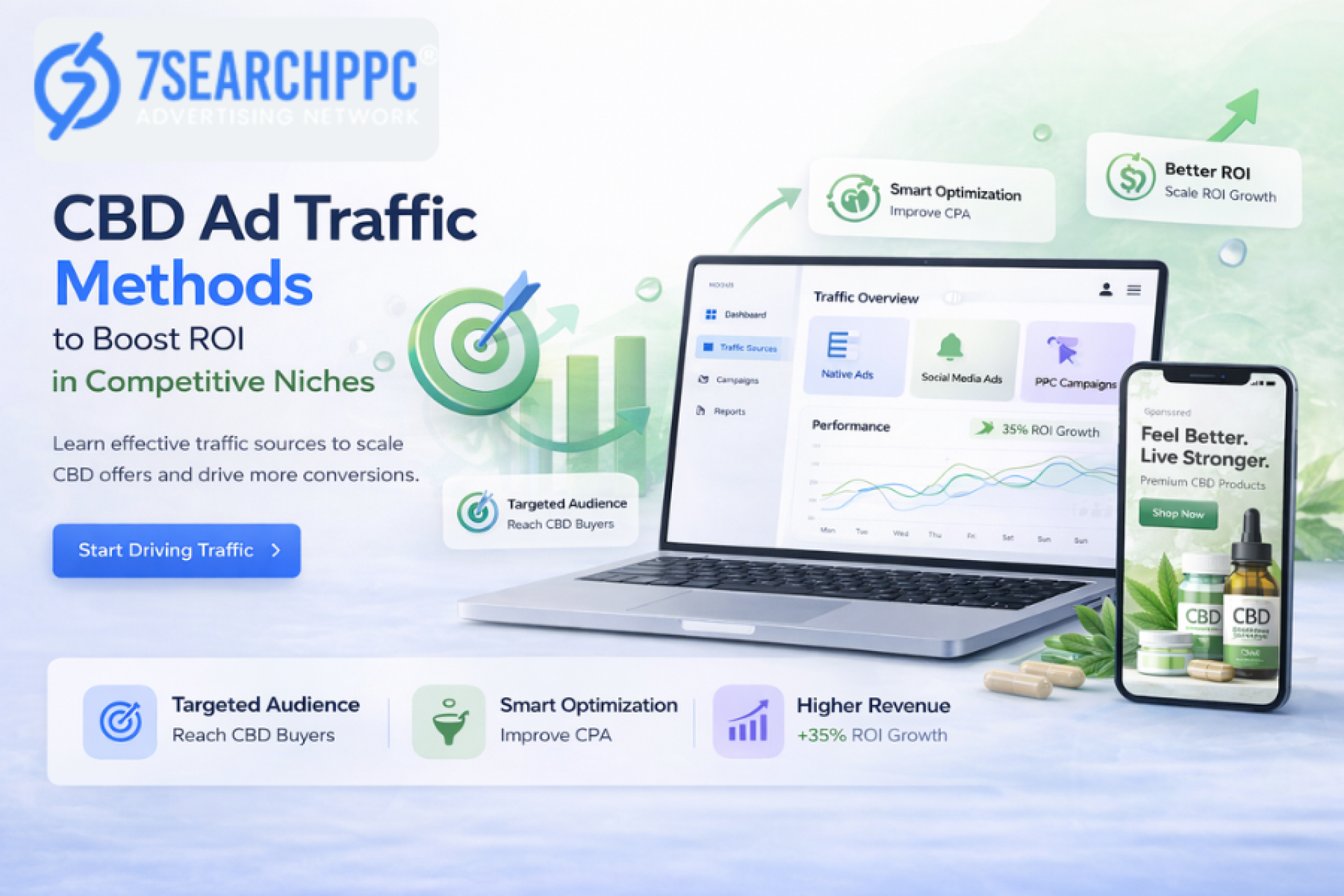
Budget optimization also plays a major role. Many advertisers now rely on platforms like 7SearchPPC as part of their broader media mix. It provides structured access to performance-driven placements where advertisers can test, refine, and scale campaigns with better control over CBD PPC campaigns and traffic segmentation. The key is not dependency, but strategic integration within a diversified ad ecosystem.
When done right, CBD advertising becomes less about restrictions and more about strategy. The brands that win are those that treat compliance as part of their creative process rather than a limitation.
Final Thoughts
The CBD market is not slowing down—it’s maturing. And with that maturity comes a more disciplined approach to advertising. While platforms continue to tighten policies, opportunities still exist for advertisers who understand how to navigate the system responsibly.
Whether you’re a healthcare advertiser, a performance agency, or a CBD brand scaling internationally, the focus in 2026 should be on sustainable growth. That means leveraging compliant ad networks, investing in content-driven funnels, and optimizing every stage of the customer journey.
CBD advertising is no longer about shortcuts. It’s about strategy, patience, and precision. And for those willing to adapt, it remains one of the most promising verticals in healthcare marketing today.
Learn More:- https://www.7searchppc.com/blog/high-ticket-affiliate-marketing/
FAQ:
Are CBD ads legal in 2026?
Ans. Yes, CBD ads are legal in many regions, but they are heavily regulated. The legality depends on the platform, country laws, and how the product is positioned in the advertisement.
What is the best way to run CBD advertising campaigns?
Ans. The most effective approach is using compliant traffic sources like native ads, push ads, and specialized CBD ad networks that understand regulatory requirements.
Can I run CBD PPC campaigns on major platforms?
Ans. Some platforms restrict CBD-related promotions, so advertisers often use alternative PPC networks and traffic sources designed specifically for regulated industries.
What are native ads for CBD products?
Ans. Native ads for CBD blend into editorial content environments, making them less intrusive and more trust-oriented, which helps improve engagement and conversions.
How do I improve ROI in CBD marketing campaigns?
Ans. Focus on audience targeting, funnel optimization, and continuous testing. Strong CBD campaign ROI optimization comes from refining creatives and using diversified traffic sources rather than relying on one channel.